
Generative AI Solutions in 2026: Why Enterprises Need an AWS Generative AI Competency Partner
Palash Upadhyay
July 14, 2026
Generative AI has stopped being a side experiment. In 2026, it sits inside knowledge systems, developer workflows, customer support, and marketing operations. Most organisations have already tested or deployed a generative AI application. However, a much smaller group has turned that experimentation into real business value.
That gap is exactly where the right generative AI solutions make the difference. In this guide, we break down what enterprise generative AI looks like today and the AWS services powering it. We also explain why we built our practice around the AWS Generative AI Competency. Specifically, we earned that distinction through real production work, not pilot projects.
The State of Enterprise Generative AI in 2026
Three shifts define generative AI solutions this year.
First, the center of gravity has moved from chatbots to knowledge systems. Enterprises now connect generative AI to their own approved data — policies, contracts, tickets, product documentation. As a result, employees and customers get grounded answers with source context, not just plausible-sounding text.
Second, agentic AI is closing the gap between “answer” and “outcome.” Agentic systems set goals, plan multi-step workflows, call tools, and take action with minimal human intervention. Consequently, analysts expect enterprise applications integrated with task-specific AI agents to expand sharply through the end of 2026. We explore this shift in our deep dive on agentic AI for business.
Third, governance has become non-negotiable. Only a minority of organisations currently run mature governance for autonomous agents. Because agentic systems take on more independent action, that governance gap becomes the biggest source of enterprise risk.
Overall, the question enterprises ask has changed. It is no longer “should we try generative AI?” Instead, it is “who can turn generative AI into a governed, production-grade system that moves the business?”
What “Generative AI Solutions” Actually Means Today
The phrase gets used loosely, so let’s be specific. In practice, enterprise generative AI solutions fall into a few categories:
- Knowledge assistants and RAG systems. Retrieval-augmented generation lets employees or customers query internal documents in natural language. As a result, answers stay grounded in your own data, not a model’s general training.
- Agentic workflows. These systems orchestrate multi-step business processes end to end. For example, they can triage support tickets, reconcile invoices, run compliance checks, or manage campaign setup.
- Developer and operations copilots. AI assistants sit inside the software lifecycle, from code generation to code review to incident response.
- Content and customer-facing generation. Product descriptions, personalised marketing, and conversational support often serve as the first entry point for retail and D2C brands.
- Industry-specific applications. These include patient experience tools in healthcare, fraud detection in financial services, and production planning in manufacturing.
Naturally, each category needs a different technical shape. Yet all of them rest on the same foundation-model infrastructure — which is where AWS comes in.
The AWS Generative AI Stack Powering These Solutions
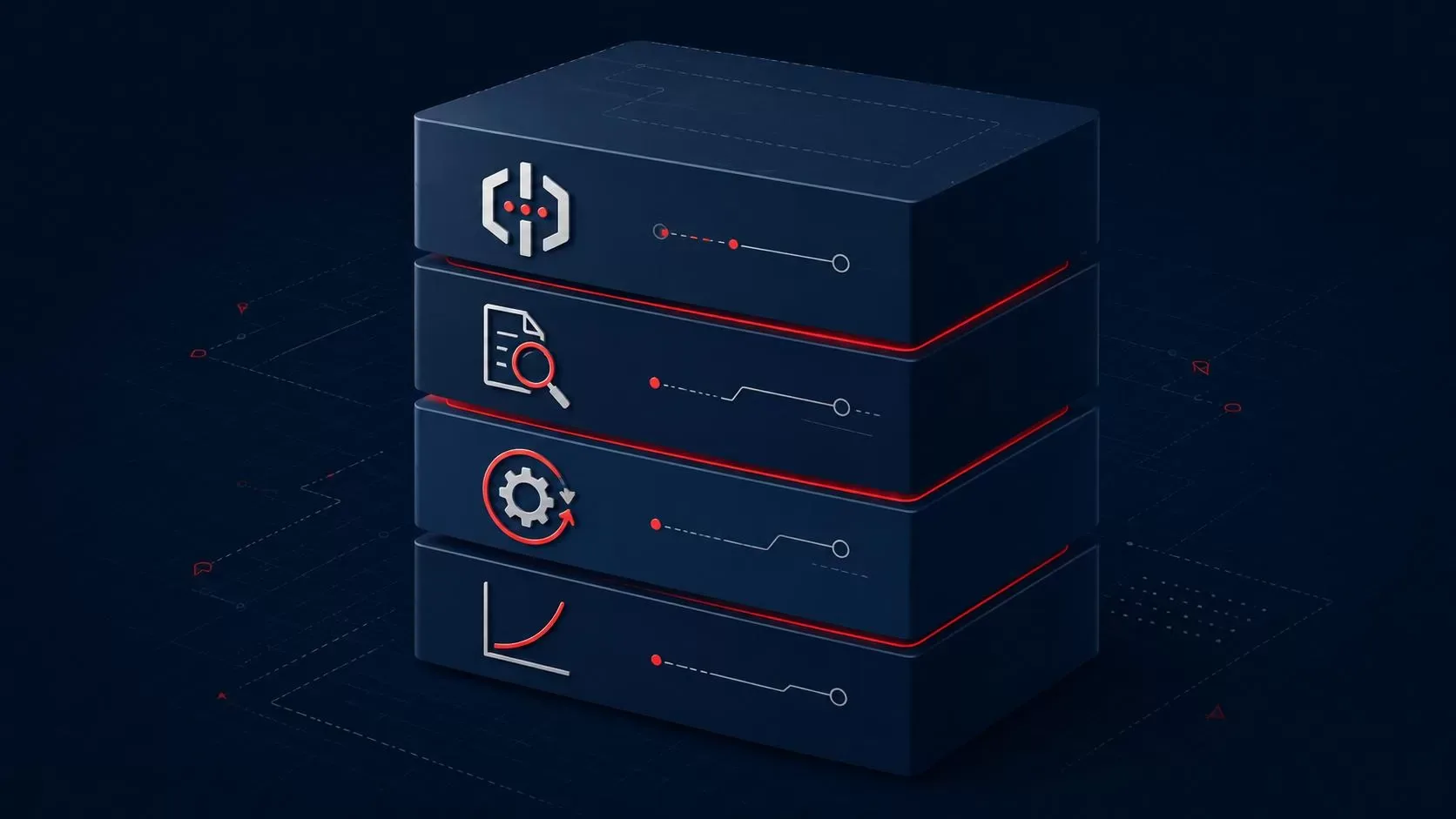
AWS has built out a genuinely comprehensive stack for generative AI solutions. Understanding the pieces, therefore, clarifies what a competent implementation actually requires.
Amazon Bedrock is the entry point for most enterprise generative AI work. It gives access to a broad catalogue of foundation models through a single managed API. Specifically, that catalogue spans Anthropic’s Claude, Meta’s Llama, Mistral, and Amazon’s own Nova family. Because of this, teams never provision or manage GPU infrastructure. Our AWS Bedrock guide covers the platform in depth.
Bedrock Knowledge Bases, meanwhile, delivers a managed retrieval-augmented generation pipeline. It pairs foundation models with vector search over your proprietary data — the backbone of most enterprise knowledge assistants.
Bedrock AgentCore, in turn, provides the infrastructure layer for agentic AI: memory management, runtime isolation, and observability. As a result, engineering teams build business logic instead of plumbing.
Amazon SageMaker handles the full model lifecycle for teams that need fine-tuning or custom development. Specifically, that spans training, evaluation, deployment, and monitoring at scale.
Amazon Q, finally, brings generative AI directly into developer tools and business applications. For instance, it integrates with IDEs like VS Code and IntelliJ, as we outlined in our look at Amazon Q and AWS.
In addition to this core stack, AWS Lambda increasingly handles AI inference directly. Similarly, infrastructure as code practices now extend to versioning Bedrock model deployments alongside traditional infrastructure.
Altogether, this is a powerful stack. However, it is also a wide one. That width, in fact, is exactly where enterprises run into trouble building alone.
Why the Adoption-to-Value Gap Exists
If the AWS tooling is this capable, why do so many generative AI solutions stall? In practice, a few patterns show up again and again:
- Teams skip data readiness. They connect a model to messy or siloed data, then wonder why answers turn out unreliable.
- Governance arrives after deployment, not before. Consequently, bolting on permission boundaries and audit trails later costs far more than designing them in from day one.
- The wrong model gets picked for the wrong job. Often, a single “one model fits everything” choice ignores the trade-offs between fast, cost-optimised models and deeper reasoning models.
- Cost and scale surface too late. Because token-based pricing rewards deliberate model selection, teams that skip this step get an unpleasant bill.
- Integration with existing systems gets underestimated. For example, a proof of concept that never connects to the CRM or ERP never becomes a production system.
Importantly, none of these are AWS limitations. Rather, they are implementation gaps. That is exactly why a validated, experienced partner exists — to close these gaps before they become expensive.

Why the AWS Generative AI Competency Matters
AWS created the Generative AI Competency to help enterprises separate real production expertise from marketing claims. Today, it sits inside the broader AWS AI Competency.
Earning it, however, takes real work. Partners go through architecture reviews, technical validation, and proof of real-world implementations across security, responsible AI practices, and operational excellence. Additionally, AWS recently expanded the programme with dedicated categories for Agentic AI Applications, Tools, and Consulting Services. In other words, that expansion recognises agentic delivery as its own distinct skill set.
So, for an enterprise choosing a partner, what does that validation actually mean in practice?
- The partner has demonstrated hands-on delivery with Amazon Bedrock, Bedrock AgentCore, and SageMaker.
- The partner follows AWS best practices for security, data governance, and responsible AI.
- Customers working with AI Competency Partners, as a result, report faster production deployments than those building alone.
Why Electromech Cloudtech Is Your Best Partner for Generative AI Solutions
We hold the AWS Generative AI Competency — one of the more rigorous validations in the AWS Partner Network. AWS, after all, awards it only to partners who show real, production-grade delivery, not pilots that never ship.
That validation rests on generative AI solutions we have already delivered. Below are five examples across different industries.
Infopercept: Secure Knowledge Retrieval for Security Teams
We built a secure Bedrock-powered knowledge retrieval system using Amazon Bedrock, Aurora with pgvector, and Lambda. Now, security experts query internal documentation in natural language. As a result, retrieval dropped from a manual search exercise to seconds, and the whole system runs privately inside the customer’s own AWS account.
Ahmedabad-Based Retail Chain: Multilingual Customer Support
We deployed a multilingual AI customer support chatbot on Amazon Bedrock, Lex, and Lambda. This bot handles Hindi, English, and Gujarati in the same conversation. Ultimately, it delivered 24×7 automated support, cut support costs by 60%, and lifted CSAT from 3.1 to 4.6 in twelve weeks.
MavenVista: Generative BI and Text-to-SQL
We delivered Generative BI and text-to-SQL capabilities on the customer’s own AWS data using Bedrock with Claude. Now, non-technical procurement staff query complex databases in plain language, while the entire pipeline stays inside their AWS account.
CloudKida: Instant Answers for a Cloud-Labs Platform
For this Ahmedabad-based cloud-labs provider, we built the AI CloudKida Chat assistant on Bedrock Titan and Mistral, with OpenSearch handling fast retrieval behind it. The chatbot answers pricing and lab-configuration questions instantly. Consequently, it cut the load on Cloudkida’s support team while running on a fully serverless, cost-efficient architecture.
Gujarat Technological University: A Student-Facing AI Assistant
We also built a RAG-based student assistant trained on GTU’s own public content using Amazon Bedrock. Now, students ask admissions, course, and campus questions in plain language and get instant, accurate answers. In fact, effective use of GTU’s information resources rose by almost 90% after launch.

Our Approach Across Every Engagement
Across every engagement, our approach stays consistent. First, we start with a real business workflow, not a model. Then, we assess data readiness and governance needs before we write implementation code. Next, we choose foundation models deliberately, based on the task at hand. Finally, every generative AI system we build runs inside the customer’s own AWS account, so customer data never trains shared models and never leaves the customer’s environment.
Beyond the technical delivery, we have also worked as an AWS Partner since 1996, with deep experience across cloud migration and Red Hat-authorized training. Consequently, this gives us an unusually complete view of enterprise infrastructure. After all, a generative AI solution is only as reliable as the cloud foundation, security posture, and DevOps discipline underneath it.
Getting Started with Generative AI Solutions
Evaluating generative AI for 2026? In our experience, a structured starting point beats another open-ended pilot:
- Run a readiness assessment. Map your data landscape and pick the two or three workflows most likely to show measurable ROI.
- Choose the right entry point. Typically, a knowledge assistant or RAG system is the lowest-risk starting place. Agentic workflows, meanwhile, come once governance is in place.
- Design governance before you build. Specifically, decide what a system can and cannot do autonomously, and what requires human review, from day one.
- Work with a validated partner. After all, an AWS Generative AI Competency partner has already solved the mistakes that stall unguided projects.
So, generative AI is no longer a question of whether to adopt it. Instead, the real question is whether your implementation delivers value securely, cost-effectively, and at production scale. That, ultimately, is the work we do every day.
Ready to explore generative AI solutions for your business? Talk to our AWS Generative AI Competency team about where to start.
Uncategorized