
Bank of Baroda Data Breach: What Happened and the Cloud Security Lessons Every Business Should Take Away
Palash Upadhyay
July 28, 2026
TThis week, one of India’s largest state-run lenders became the latest reminder of a hard truth. A single compromised inbox can put millions of customer records at risk. The Bank of Baroda data breach has dominated headlines since Monday. As a company that lives and breathes cloud security, we think it deserves more than a passing news mention. So let’s walk through what actually happened. Then let’s look at why the breach unfolded this way, and what it teaches every business about protecting data in the cloud.
What Happened in the Bank of Baroda Data Breach
On July 27, 2026, Bank of Baroda confirmed it was investigating a security incident. Reports had surfaced that roughly 1 terabyte of customer and internal data leaked on the dark web. The bank said the root cause was a compromise of a single employee’s email account. That compromise led to unauthorized access to certain data. Importantly, the bank stated that its core banking systems remained untouched and secure.
What Data Was Exposed
Cybersecurity researchers say the leaked dataset reportedly includes customer details, identification documents such as Aadhaar numbers, loan paperwork, and internal audit records. Some reports place the number of affected customer application forms between 100,000 and 300,000. That range includes photographs and identity documents collected during account opening. A relatively new extortion group known as Triple X has links to the leak. The data first appeared on a dark web monitoring platform on July 24.
The Bank’s Response So Far
Bank of Baroda has launched a forensic investigation and put containment measures in place. The bank is also coordinating with regulators and law enforcement. As of now, its core banking infrastructure appears untouched. Even so, this is a serious incident. It raises fresh questions about how India’s banking sector handles disclosure obligations under the Digital Personal Data Protection (DPDP) Act, and how prepared financial institutions really are for attacks like this one.
Why a Single Email Account Caused So Much Damage
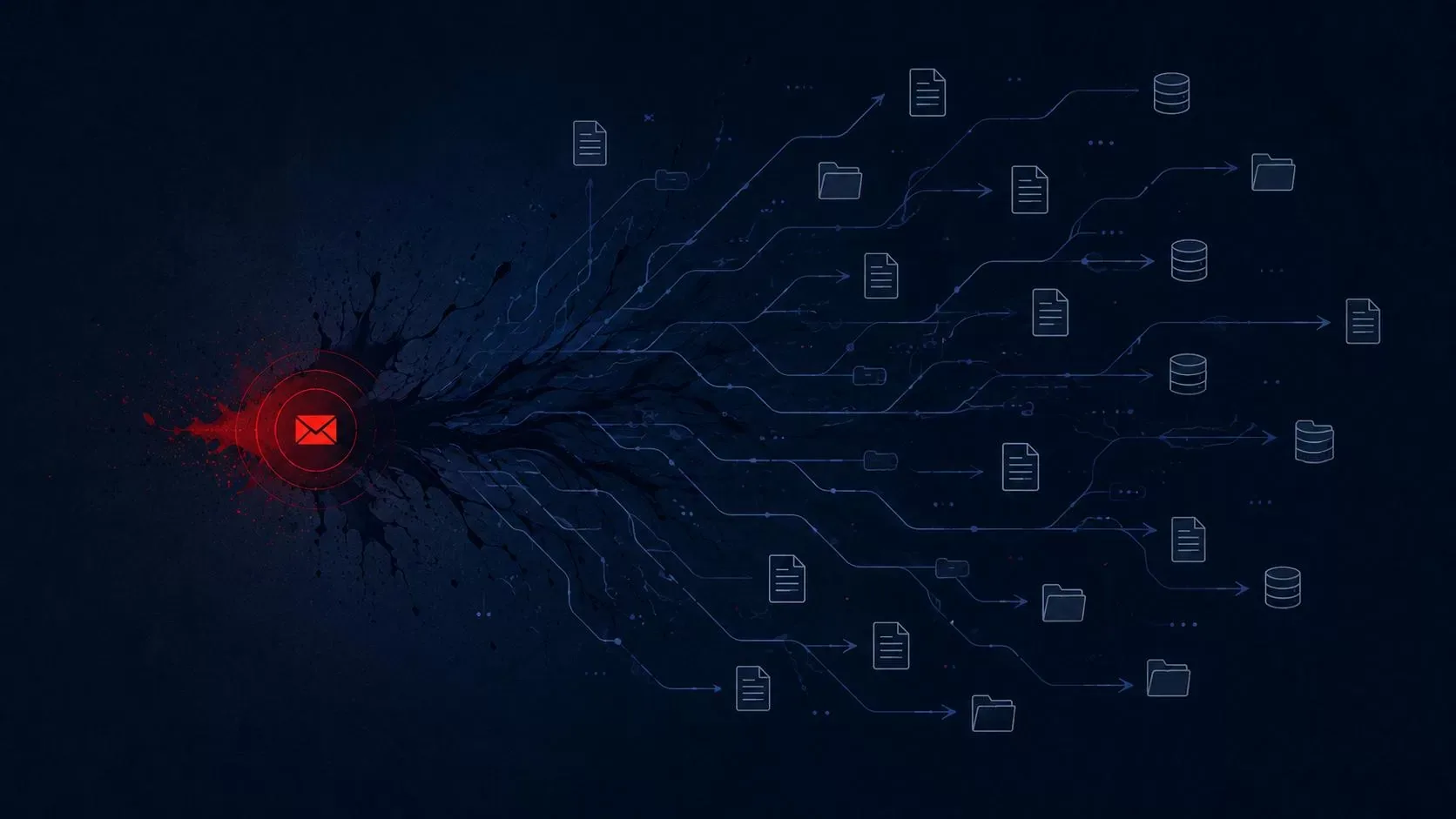
Here’s the part that should worry every business leader, not just bankers. This breach didn’t start with a sophisticated zero-day exploit. It didn’t involve a nation-state attack on encrypted infrastructure either. It started with one employee’s email account. That’s it.
The Human Layer Is Still the Weakest Link
This pattern shows up again and again in major breaches. It’s why we keep coming back to a simple truth in our own client work: technology can only protect you as far as your weakest human link allows. Once an attacker gains access to a legitimate employee mailbox, they inherit whatever that account can see and touch. That often includes shared drives, internal documents, password reset flows, and sometimes credentials to other systems entirely. From there, a single point of compromise can snowball into a terabyte-scale leak.
Where Cybersecurity Meets Cloud Security
This is also where cybersecurity and cloud security start to blur into one discipline. Cybersecurity covers the broader practice of defending networks, endpoints, and people from attack. Cloud security is more specific. It focuses on how data, workloads, and identities get protected once they live in a cloud environment like AWS. A breach like this one sits at the intersection of both. A human-layer failure, like a phished email account, meets an organization’s cloud architecture. Depending on how that architecture is built, the failure gets contained quickly, or it cascades.
The Cloud Security Principles That Would Have Limited the Blast Radius
We can’t speak to Bank of Baroda’s specific architecture, and we won’t speculate on their internal setup. What we can do is walk through the cloud security fundamentals that, when properly implemented, consistently limit how far a single compromised account can reach. These are the same principles we build into every engagement at Electromech.
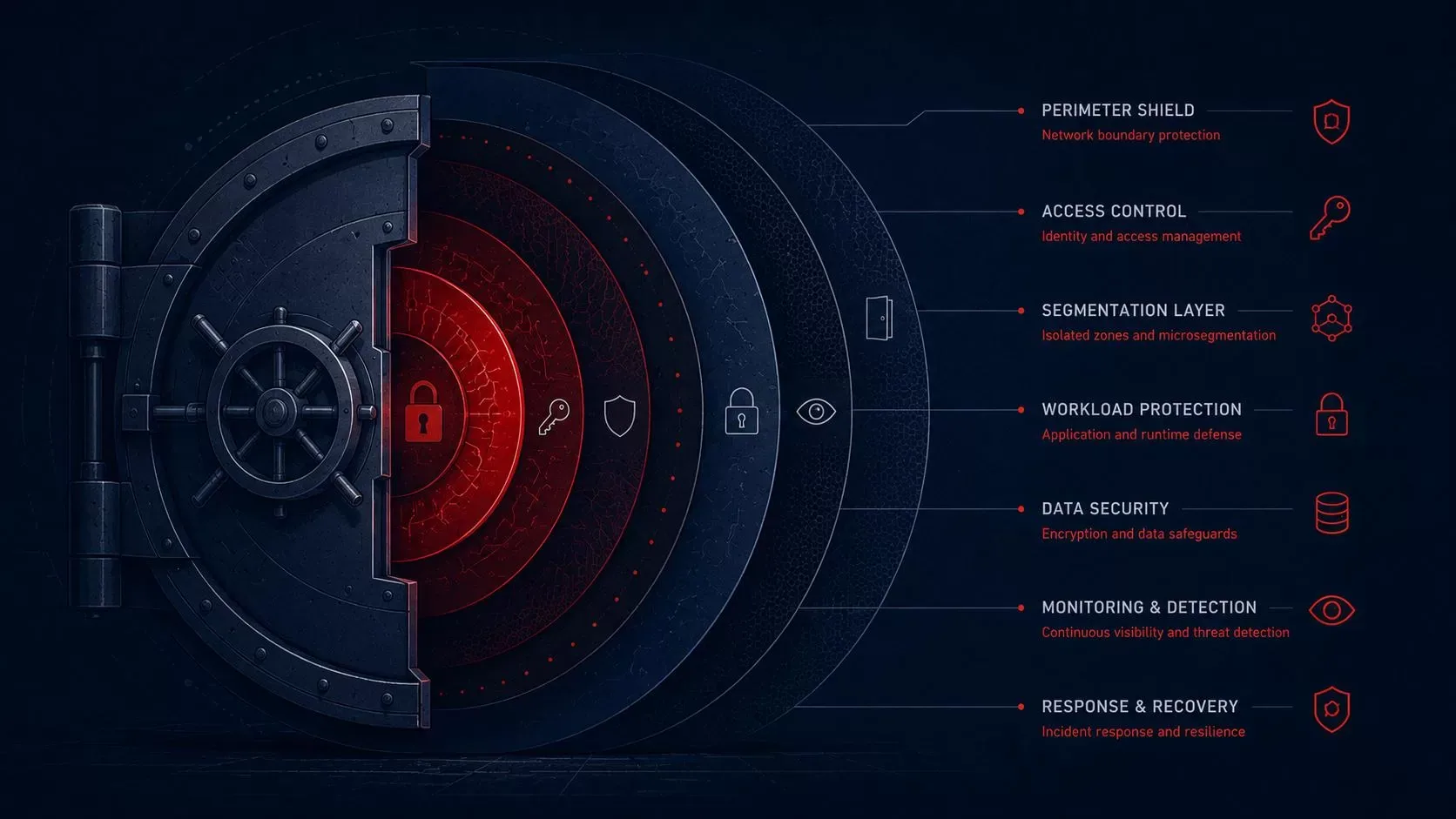
- Least-privilege identity and access management. Every account, human or machine, should only have the permissions it needs and nothing more. If an employee’s email credentials can somehow open a path to loan documents, audit records, or identity files, the access model has too many implicit trust relationships baked in.
- Short-lived credentials over long-lived ones. Static passwords and long-lived access keys are exactly the kind of thing an attacker loves to find sitting in an inbox. Modern identity approaches, including AWS IAM Roles Anywhere for workloads outside AWS, replace those static secrets with short-lived, automatically rotating credentials.
- Encryption at rest and in transit. Sensitive data — identification documents, financial records, audit trails — should be encrypted wherever it lives, so that even if a bucket or share is exposed, the contents aren’t immediately usable.
- Segmentation between systems. Email, document storage, and core transactional systems should sit in separate trust zones. A breach in one shouldn’t automatically open a door into another, which appears to be exactly what protected Bank of Baroda’s core banking systems in this case.
- Continuous monitoring and anomaly detection. Unusual access patterns, like a mailbox suddenly pulling large volumes of internal documents, should trigger alerts long before a terabyte of data walks out the door.
- Tested disaster recovery and incident response plans. When an incident does happen, how fast an organization detects it, contains it, and communicates about it matters almost as much as the initial defense.
None of these are exotic ideas. They’re well-established parts of the AWS Shared Responsibility Model and the AWS Well-Architected Framework’s security pillar. The gap between knowing these principles and consistently operating them across a large, complex organization is exactly where most breaches happen.
What This Means for Businesses Outside Banking
It’s tempting to read a story like this and think, “we’re not a bank, so this doesn’t apply to us.” We’d push back on that. Every business today holds data an attacker would happily monetize. That includes customer records, financial data, or intellectual property, whether you’re a mid-sized manufacturer or a fast-growing SaaS company. A compromised inbox at a small or mid-market company can do just as much damage. Often, nobody notices as quickly, because these organizations rarely have the security operations bandwidth a large bank does.
If anything, this breach is a useful prompt for every business to ask a few uncomfortable questions:
- Do we know exactly what data our employee email accounts can reach?
- Are we relying on long-lived passwords and access keys where short-lived credentials would work instead?
- Would we detect an unusual data pull from an internal account within minutes, or would we find out from a dark web researcher?
- Is our disaster recovery plan isolated enough that a breach in one system can’t compromise our backups too?
- Do we have a tested incident response plan, or are we planning to figure it out live during an actual crisis?
If any of those questions gave you pause, that’s a sign it’s worth a proper cloud security review, not a reason to panic.
How We Keep Cloud Safety Paramount at Electromech
Cloud security isn’t a checkbox for us. It’s woven into how we design, migrate, and manage every environment we touch for our clients. Since 1996, we’ve helped businesses build cloud infrastructure that holds up under real-world pressure. Incidents like the Bank of Baroda data breach are exactly why we treat security as a foundation, not an add-on.
How This Shows Up in Our Client Work
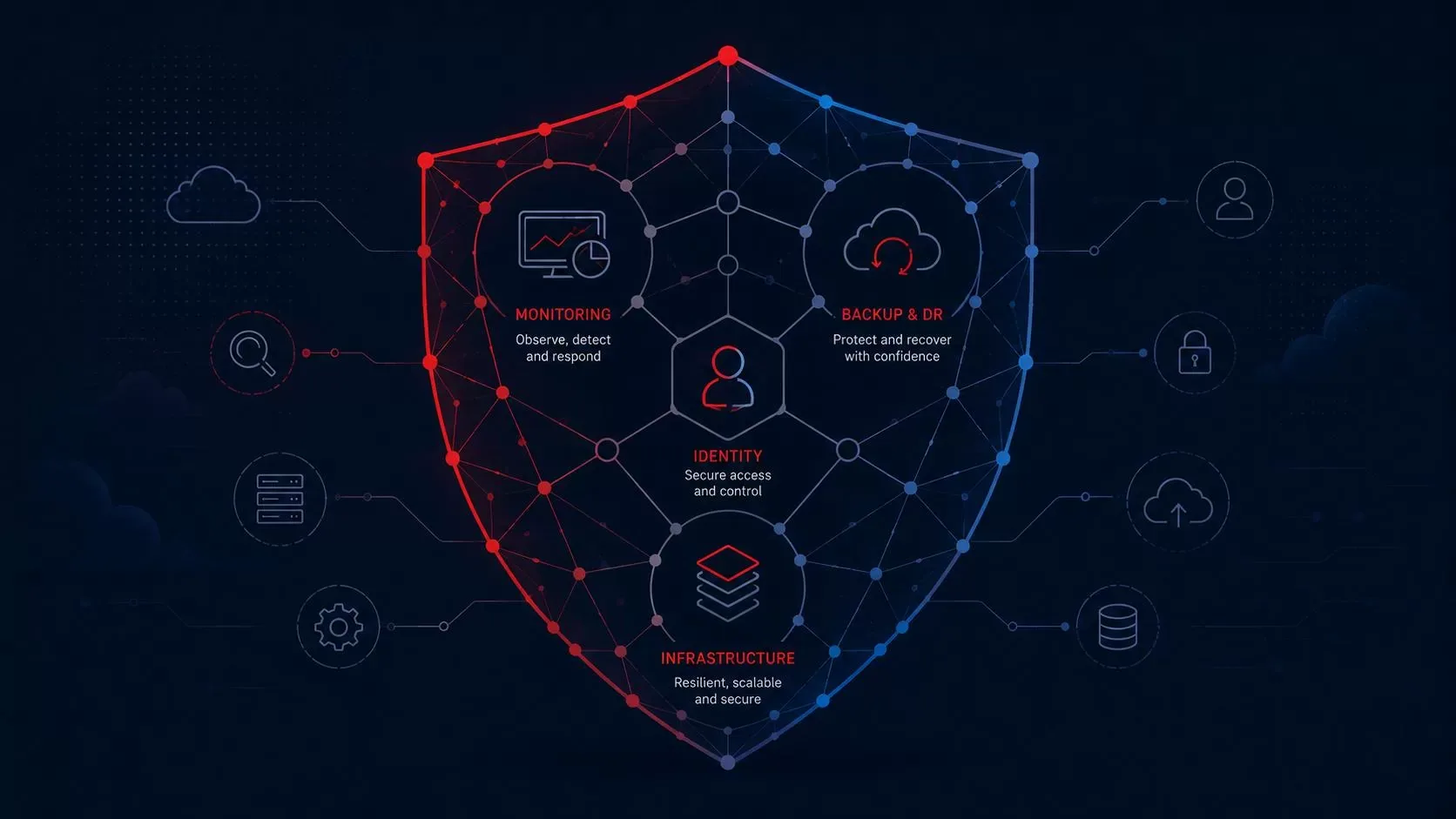
- Security Threat and Response as a managed service. We provide continuous, real-time monitoring across your AWS environment, so anomalous access patterns get flagged and investigated before they turn into a headline.
- DevSecOps built into the pipeline. We integrate automated security testing and infrastructure as code into your CI/CD process, so vulnerabilities get caught before they ever reach production, not after.
- Disaster Recovery and Backup that assumes the worst. Our Disaster Recovery & Backup solutions use geographically independent, encrypted, and regularly tested recovery points. Backups that live next to the systems they protect aren’t real protection. We’ve applied this exact approach for clients like Torrent Pharma. There, we designed and ran a near real-time DR solution for a business-critical sales force automation platform.
- Identity-first architecture. We help clients move away from long-lived credentials wherever possible. Our recent work with AWS IAM Roles Anywhere shows how short-lived certificates can replace static access keys at a fraction of the usual cost. That closes off one of the most common breach entry points.
- Well-Architected Reviews across every engagement. Every Cloud Readiness Assessment and managed services relationship includes a structured look at the Security pillar of the AWS Well-Architected Framework. You’ll find that same discipline behind our own AWS S3 security and storage guide.
- Lessons from real outages, not just theory. When the AWS UAE region faced disruption earlier this year, we broke down why regional resilience and independent backup storage matter for businesses across the Middle East and beyond. That same resilience thinking applies directly to breach scenarios like this one.
Why We Treat This as Urgent
Cybersecurity headlines move fast. It’s easy for “we should really look into this” to quietly slip down the priority list until an incident forces the issue. Our goal is simple: make sure that conversation happens on your terms, with a plan already in place, rather than in the middle of a crisis.
Talk to Us About Securing Your Cloud Environment
If the Bank of Baroda data breach has you wondering how your own organization would hold up, that’s a completely reasonable reaction, and we’d rather you ask the question now than after an incident. Our team can run a focused security and resilience review of your AWS environment, covering identity management, data protection, backup isolation, and monitoring, so you know exactly where you stand.
Book a free consultation with our cloud security team and let’s make sure your cloud environment is ready for whatever comes next.
Uncategorized